Wholesale Order Portal & AWS Migration
Industry: Wholesale & Distribution · Location: Melbourne, VIC · Timeline: 6 weeks migration + 8 weeks portal · Outcome: 40% drop in inbound phone orders, 50% reduction in hosting cost.

The Problem
A family-run Melbourne wholesaler had been running its entire operation on a single 2012-vintage Dell server in the back office. It hosted the accounting system, the inventory database, and a small Windows application their sales team used to take phone orders. The server was out of warranty, the operating system was no longer supported, and the business owner had been refused a loan to replace it because the bank wanted to see "a proper cloud strategy" first.
Customers placed orders by phone or email. The sales team typed each order into the Windows application by hand. On a busy Monday morning, three staff were on the phone for four hours straight, and still customers waited on hold for 20 minutes. Mistakes happened: wrong products shipped, prices quoted from outdated catalogues, credit limits ignored.
What We Did
We started with a full read-only audit. We mapped every application running on the server, inventoried the SQL Server database, and produced a migration plan in three waves. Wave one: static website and email, moved to AWS S3 and SES with zero risk. Wave two: the accounting system and database, moved to AWS RDS and EC2 over a weekend. Wave three: the internal Windows app, re-platformed as a small web application.
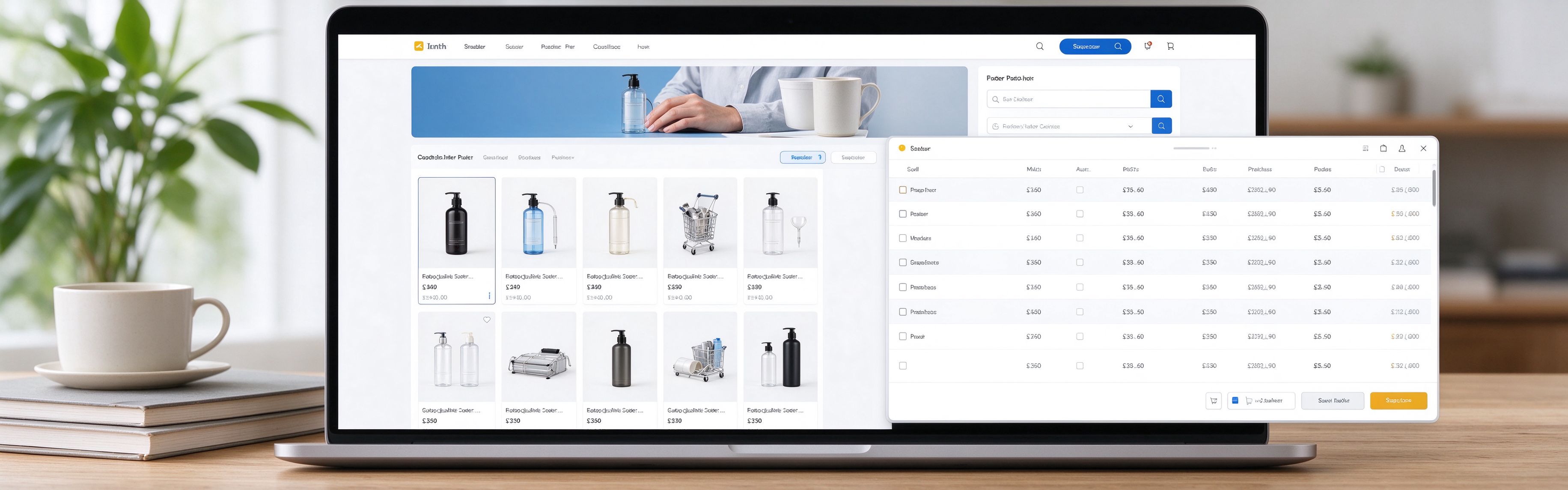
Once the foundation was stable, we built a customer-facing order portal. Trade customers log in, see their custom price list, check stock levels in real time, place orders, and download invoices. The portal connects to the accounting system via a secure API, so orders flow straight through without double entry. Credit limits are enforced automatically: customers over their limit see a clear message and a call-to-action for accounts.
The Result
In the first quarter after launch, inbound phone order volume dropped by 40%. The sales team now spends that time on relationship calls rather than data entry. Orders are entered with the correct price and stock availability every time, and credit hold errors have essentially disappeared. Hosting cost dropped by 50% compared to running the old server plus a backup contract, and the business finally has a cloud story the bank is happy with.
Technical approach and challenges
The hardest part was not the portal itself — it was migrating the legacy SQL Server database with zero data loss. We took a full backup before the migration, stood up a parallel AWS RDS instance, and used database replication to keep the two in sync for a week before cutover. That meant we could switch back to the old server in minutes if anything looked wrong. In the end, cutover happened on a Saturday morning and was complete by lunchtime. Monday's trading ran on AWS without anyone noticing.
The portal itself was built in Python (Django) on the backend and React on the frontend. It talks to the accounting system via a nightly batch sync plus a real-time API for live stock and pricing. We added a simple admin dashboard so the sales manager can see which customers are online, which orders are pending approval, and where stock levels are running low.
Have a similar legacy situation?
Book a free 30-minute call. We will tell you what a phased migration would look like for your business.
Book a Free ConsultationFrequently Asked Questions
What would a project like this cost and how long would it take?
A wholesale portal plus a phased AWS migration of this scale typically runs 8–12 weeks and $40,000–$80,000 fixed. We quote a fixed price after a discovery workshop, based on your customer count, integration points and data complexity.
How did you avoid downtime during the migration?
We migrated in three waves, each following the same pattern: full backup, pilot with a small group, cutover outside business hours, keep the old system warm for two weeks, then decommission. The business traded on Monday without noticing the change.
Can a customer portal really cut our inbound phone orders?
Yes. When customers can log in, see their own price list, check stock and place orders themselves, inbound phone order volume typically drops by 30–50%, freeing your sales team for relationship work.